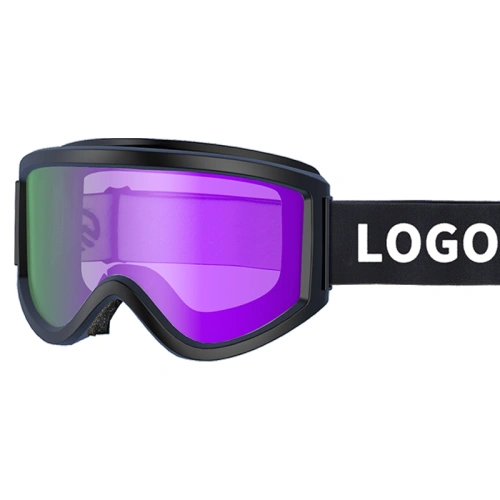
A dual-pane lens contains two separate optical surfaces with an enclosed space between them. Air is a relatively poor conductor of heat compared with many solid materials, so the gap can slow direct thermal transfer between the warmer interior and colder exterior. The result depends on the width of the gap, the materials used, and how effectively the cavity remains isolated from outside airflow.
Temperature differences still exist across the lens system, but the intermediate air layer changes the rate at which heat moves. This principle is similar to thermal insulation used in other applications, although the dimensions and optical requirements of a goggle introduce additional engineering constraints.
For Ski goggles women, the same thermal principle applies regardless of gender, while fit and facial dimensions can influence how the sealed lens system performs in actual use. A properly positioned goggle helps maintain the intended relationship between the lens and the wearer's face.
The air gap therefore functions as a thermal buffer rather than simply an empty space between two lenses.
Fog forms when warm, moisture-rich air encounters a surface cold enough for water vapor to condense. A dual-lens system can keep the inner optical surface thermally separated from the colder outer lens, reducing the severity of that temperature difference under suitable conditions.
Ventilation remains important because the air gap alone does not remove moisture generated inside the goggle. Heat and humidity from breathing and physical exertion still accumulate around the face. Frame vents, foam structure, and airflow pathways work alongside the lens system to influence the internal environment.
A dual-pane system is therefore most useful when its thermal characteristics are supported by an appropriate ventilation strategy.
Prescription wearers face additional considerations because the corrective lens sits behind the goggle lens. The distance between the two optical systems, frame size, and available interior space can affect comfort and perceived vision. Pressure may also develop if the snow goggle does not provide enough room around the prescription frame.
OTG-compatible designs address some of these physical constraints by providing additional internal clearance. However, compatibility still depends on the dimensions and shape of the prescription glasses. A narrow metal frame and a large acetate frame can occupy very different amounts of space.
For best prescription Ski goggles, buyers and product developers should therefore assess prescription-frame compatibility separately from the thermal advantages of a dual-pane lens. A sophisticated lens construction does not automatically resolve fit issues created by another pair of glasses.
The optical system works best when lens spacing, facial geometry, and prescription eyewear have been considered together.
Gender-specific product labeling does not necessarily indicate a completely different optical principle. More meaningful differences often arise from facial dimensions, bridge width, temple position, and overall head shape. A goggle intended for a particular demographic may use different sizing or geometry to accommodate common fit requirements within that market.
Foam plays an important role in adapting the rigid or semi-rigid frame to the face. Its density and compression characteristics influence pressure distribution, while the strap determines how firmly the goggle remains positioned. Helmet compatibility can further change the fit around the forehead and sides.
Our team at YIJIA Optical considers these physical relationships when developing sports eyewear because the thermal performance of a lens cannot be separated entirely from how the goggle sits on the face.
Comfort, sealing, ventilation, and optical positioning all contribute to the final wearing experience.
Laboratory measurements can reveal useful information about thermal behavior, yet snow sports involve changing temperatures, wind speeds, humidity, and activity levels. A goggle may behave differently during a high-intensity descent than while standing on a lift, where breathing and movement patterns change.
Testing should therefore include multiple conditions and complete equipment setups. Prescription glasses, helmets, face coverings, and different facial shapes can alter the internal air volume and airflow. Repeated exposure to cold and moisture can also reveal how materials and seals behave over time.
For Ski gogggles women, evaluating the actual target fit can be especially useful if the product is designed around specific facial dimensions or sizing requirements. The same dual-pane principle remains valid, but physical execution determines how effectively the system functions in practice.
A complete test program connects optical physics with the conditions users actually encounter.
The sealed air space in a dual-pane lens performs a specific physical role: it creates an intermediate thermal layer between the warmer inner environment and the colder exterior. That separation can influence condensation behavior, but it works alongside ventilation, frame geometry, foam, and lens treatments rather than replacing them. Prescription users introduce another variable, making interior clearance and optical spacing equally important.
At YIJIA Optical, we approach these factors as parts of one product-development system. For brands and buyers assessing best prescription Ski goggles, the most useful evaluation considers thermal structure, optical configuration, facial fit, and real-world conditions together.

