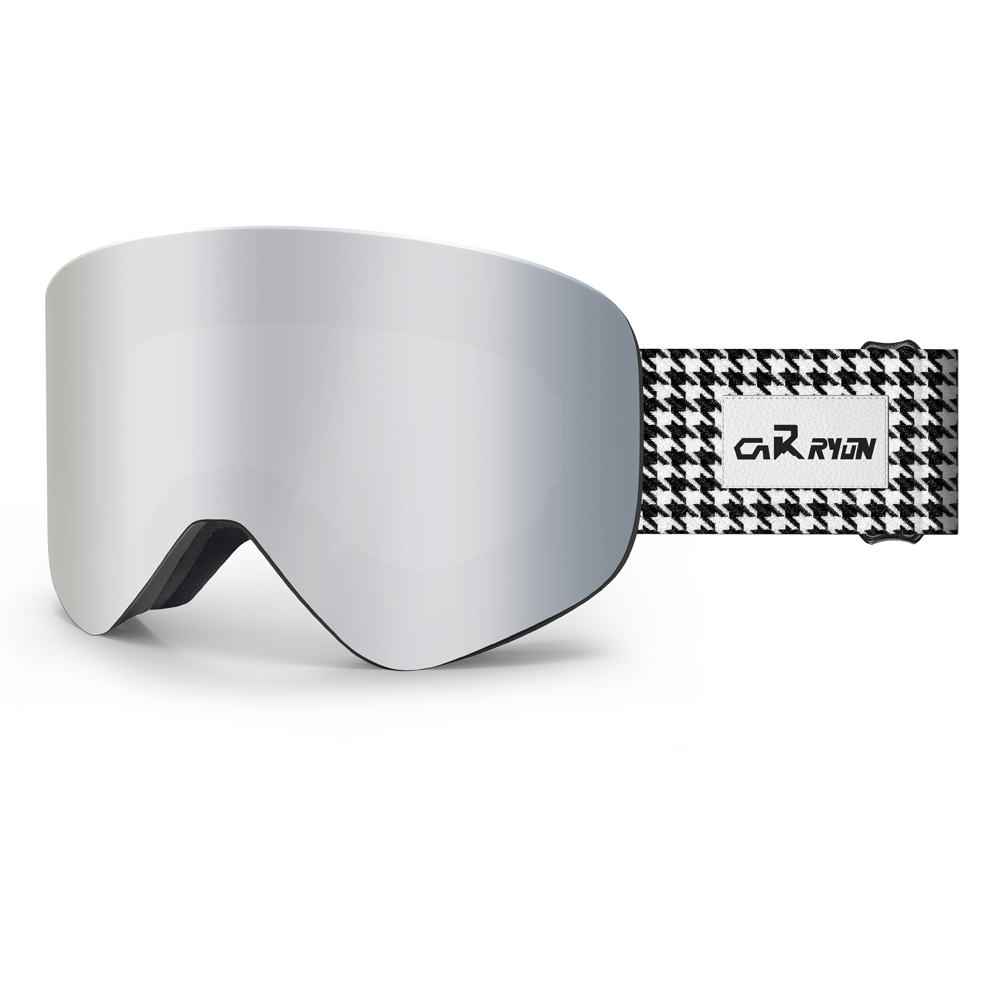
Light conditions influence how clearly terrain features appear. A lens suitable for bright sunshine may feel too dark once heavy clouds arrive, while a lighter configuration can provide more useful visibility in reduced light. Having different options available gives skiers greater flexibility throughout a day on the mountain.
The need for a replacement can also arise from unexpected weather rather than a planned schedule. Snowfall, fog, changing cloud density, and movement between open slopes and tree-covered areas can all alter the visual environment. A practical lens system allows the skier to respond to those changes without carrying an entirely separate goggle frame.
Speed matters because lens changes often happen in cold conditions, sometimes while wearing gloves. A design that requires several small parts or complicated alignment can become inconvenient between runs. Simplicity is valuable when the equipment needs to be adjusted quickly and securely.
Magnetic attachment uses strategically positioned magnets to hold the lens against the frame. Instead of relying entirely on mechanical clips or complex locking structures, the lens can be positioned and attached through the magnetic interface. The exact mechanism varies between designs, so the stability of the finished system still needs to be assessed.
One advantage of Ski goggles with interchangeable lenses is that the same frame can accommodate different optical configurations. A skier might use a darker option during strong daylight and switch to another lens when visibility decreases. The practical benefit comes from matching the available lens choices to the conditions rather than changing equipment unnecessarily.
Lens alignment also matters. The optical surface should sit correctly within the frame after replacement, with the attachment points positioned as intended. A fast change is useful only if the lens can be installed consistently without creating gaps, movement, or an uneven fit.

The physical shape of the frame has a direct effect on how easily a lens can be handled. A broad lens area may offer a generous field of view, but the attachment structure still needs to provide accessible contact points. The wearer should be able to understand the replacement process without relying on complicated tools.
At YIJIA Optical, the YH879C features a cylindrical double-lens construction with an anti-fog lens, UV400 protection, and magnetic lens technology. Its optical and impact characteristics are developed against EN ISO 18527-1, so the lens-change convenience does not come at the expense of standardized performance. The combination illustrates how lens attachment can be integrated with other goggle requirements rather than treated as an isolated feature.
The replacement lens should also be protected during handling. Scratches can occur if lenses are placed directly on rough surfaces or exposed to hard objects in a Ski bag. Carrying spare lenses in a suitable protective case can make the swapping process safer and reduce unnecessary surface damage.
Not every skier needs the same number of lens options. Someone who usually skis in stable, sunny conditions may have different requirements from a person who frequently visits areas with changing cloud cover. The useful question is how many conditions the lens system realistically needs to address.
A custom Ski goggles project can be adapted around specific use cases, including preferred lens colors, frame details, straps, logos, and packaging. Customization can also involve the selection of lens functions, allowing brands to develop a product configuration that corresponds with their intended market rather than simply copying an existing appearance.
Lens characteristics should be considered alongside the attachment method. Anti-fog performance, UV protection, optical clarity, impact resistance, and lens construction all influence the finished product. A quick magnetic connection has limited value if the optical configuration does not suit the environment in which the goggles are used.
Before removing a lens, find a clean and stable location away from loose snow, grit, and sharp equipment. Holding the frame securely while handling the lens by its edges can reduce fingerprints on the optical surface and limit accidental contact with the viewing area.
With Ski goggles with interchangeable lenses, it is useful to practice the removal and installation process before reaching the mountain. Familiarity with the attachment points can make the procedure much easier when temperatures are low or visibility is changing quickly. Spare lenses should also be stored separately from objects that could scratch their surfaces.
A sensible storage routine extends beyond the lens itself. After skiing, allow moisture to dry naturally according to the manufacturer's care guidance rather than aggressively wiping the inner lens. Keeping the frame, foam, strap, and lens interface clean can also help maintain the intended fit and functionality over repeated use.
A fast lens change is ultimately a combination of straightforward attachment, accurate alignment, suitable lens options, and sensible handling. Custom Ski goggles can be developed around different weather patterns and user requirements, while interchangeable systems provide a practical way to adapt the same frame across changing conditions.
At YIJIA Optical, we approach these details as part of the broader goggle design process, combining magnetic lens configurations with features such as double-lens construction, anti-fog performance, UV400 protection, and OTG compatibility. With the right setup and a little preparation, changing lenses between runs can become a simple part of managing changing mountain conditions.

