Mud, dust, water, and debris can change a motocross rider’s view within seconds, making lens-cleaning systems particularly useful during a race or trail session. Motocross goggles with tear offs use thin disposable layers that can be removed after the outer surface becomes dirty, while roll-off systems move a clear film across the lens instead.
At YIJIA Optical, we consider the two approaches from a practical perspective: how they are operated, how they respond to different riding conditions, and how much preparation a beginner needs before heading onto the track.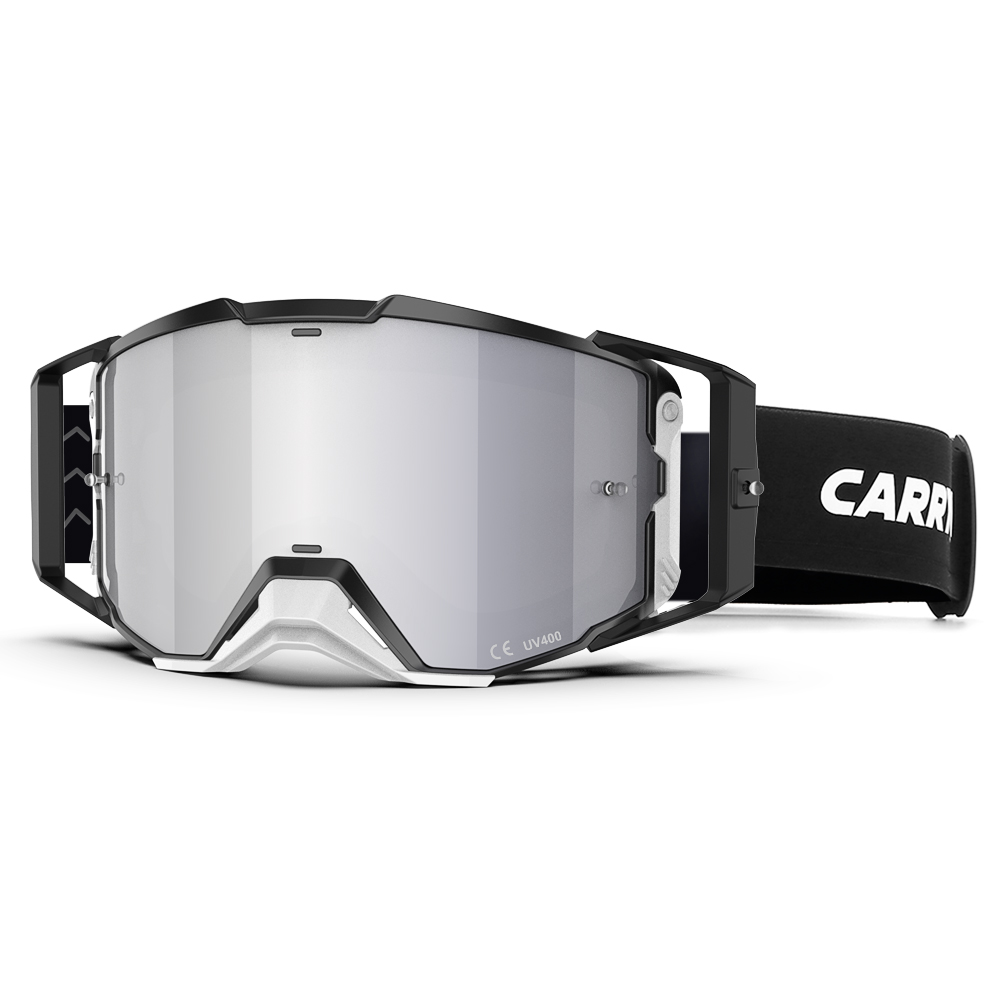
A tear-off is a transparent film positioned over the primary goggle lens. Several layers can be stacked in advance, allowing the rider to remove the outer layer after mud or dust obstructs the view. The underlying lens remains available without requiring the entire goggle to be taken off.
The simplicity of the mechanism is one reason this system remains common in motocross. There is no winding mechanism to operate, and the rider can usually remove a contaminated layer with a quick hand movement. That can be useful during competition, where stopping to clean a lens may interrupt the riding rhythm.
Preparation is part of the process, however. The films need to be installed correctly and kept aligned with the lens. If they are poorly fitted, visibility can suffer even before the first layer becomes dirty. Riders also need to understand local track rules and dispose of used films responsibly rather than leaving them on the course.
Roll-off systems use a transparent film stored on a roll. Pulling the mechanism moves a fresh section across the viewing area while the contaminated section winds away. Instead of removing an individual sheet, the rider refreshes the viewing surface through the integrated mechanism.
This approach can provide repeated cleaning without carrying numerous separate tear-off layers. It may be especially useful during muddy sessions where the outer surface becomes dirty frequently. The trade-off is that the system introduces additional components, such as film rolls, housings, and an operating mechanism.
Weather can also influence the practical difference between the two designs. Heavy mud may require frequent film movement, while dry dust can create another set of visibility challenges. A rider who understands the expected terrain and weather can select the system that fits the day's conditions rather than assuming one mechanism suits every situation.
The film system is only one part of motocross eyewear. Lens curvature, material, optical clarity, impact resistance, and surface treatments affect the underlying viewing experience. A dirty outer film can obscure vision, but a poorly designed primary lens cannot be corrected simply by adding another layer. The primary lens should still offer a recognized level of impact protection, such as ANSI Z87.1, regardless of the film system attached.
Our YM855 Magnetic Lens Motocross Goggles uses a cylindrical polycarbonate lens designed for a wide and stable field of vision. The lens provides anti-fog, scratch-resistant, UV400, optical-clarity, durability, and impact-resistance characteristics, while its magnetic lens design supports quick lens changes. The model is also compatible with tear-off use, connecting the removable-film concept with a broader protective lens configuration.
A cylindrical lens can be useful for maintaining a broad visual field while riding at speed, but riders should also consider how the goggle fits around the face and helmet. Peripheral visibility depends on the complete geometry rather than lens shape alone.
Mud is not the only reason a motocross lens can become difficult to see through. Warm, humid air inside the goggle may condense on the lens, especially during intense activity or changes in temperature. A film system does not automatically solve internal condensation because the moisture forms on the optical surface beneath the outer layer.
Anti-fog treatment addresses this issue at the lens surface. Ventilation and facial fit contribute as well by influencing how humid air moves through the goggle. These elements need to work together if visibility is expected to remain stable during extended riding.
For riders considering anti fog motocross goggles, the presence of an anti-fog function should be treated as one specification rather than the entire fog-management solution. Lens material, ventilation, fit, and riding conditions can all affect the final result.
A beginner may find tear-offs easier to understand because the operating principle is straightforward: prepare the layers, ride, and remove a contaminated layer when visibility drops. There are fewer moving parts to understand, although correct installation and responsible disposal remain important.
Roll-offs involve a slightly different learning process. The rider needs to understand how the film mechanism operates and how much film remains available. Once familiar with the system, the operation can become quick, but the additional mechanism introduces another element to inspect before riding.
Maintenance also differs. Tear-off users mainly need to check film alignment and supply. Roll-off users must pay attention to the film roll, housing, and operating mechanism. Neither system removes the need for basic lens care, particularly after exposure to abrasive dust or dried mud.
Neither tear-offs nor roll-offs is inherently the right answer for every beginner. Tear-offs offer a straightforward disposable-film approach, while roll-offs provide a reusable film movement mechanism that can be valuable during repeated contamination. The more useful question is how often the rider expects mud or dust to interfere with vision, how much preparation feels manageable, and what the riding environment demands.
At YIJIA Optical, we approach Motocross goggles with tear offs by considering those practical conditions alongside optical and protective specifications. Once those factors are clear, anti fog motocross goggles and the preferred lens-cleaning method can be evaluated as parts of the same riding setup rather than separate decisions.

